Non-Surgical & Regenerative Orthopedic Treatments | Gangnam JS Hospital Seoul
Non-Surgical & Regenerative Treatments in Seoul
Many orthopedic and sports injuries can be treated effectively without surgery. Modern regenerative medicine and non-invasive treatments focus on reducing pain, promoting tissue healing, and restoring mobility while minimizing downtime.
At Gangnam JS Hospital, specialists provide advanced non-surgical and regenerative treatment options for athletes and active individuals. These therapies aim to stimulate the body’s natural healing processes while helping patients return to daily activities and sports safely.
What Are Non-Surgical Orthopedic Treatments?
Non-surgical treatments are medical approaches designed to manage injuries and musculoskeletal conditions without the need for invasive procedures.
These treatments may help address:
• Ligament injuries
• Tendon inflammation
• Joint pain and instability
• Cartilage damage
• Muscle strains
• Early-stage degenerative joint conditions
By focusing on pain relief and tissue repair, many patients can recover effectively while avoiding surgery.
Regenerative Medicine for Sports Injuries
Regenerative medicine uses advanced therapies that encourage the body to repair damaged tissues naturally. These treatments are often used for athletes seeking faster recovery and long-term joint health.
Common regenerative therapies include:
• Platelet-rich plasma (PRP) injections
• Stem cell-based therapies
• Ultrasound-guided injection treatments
• Biological tissue regeneration techniques
These therapies can support healing in ligaments, tendons, cartilage, and muscles.
Conditions Commonly Treated Without Surgery
Non-surgical and regenerative therapies at Gangnam JS Hospital may be recommended for a variety of orthopedic conditions.
Examples include:
• Tendonitis and overuse injuries
• Partial ligament tears
• Early cartilage degeneration
• Sports-related muscle injuries
• Joint inflammation and pain
• Mild to moderate sports injuries
Comprehensive Treatment Approach
Specialists at Gangnam JS Hospital combine regenerative medicine with modern rehabilitation strategies to optimize recovery.
Treatment plans may include:
• Image-guided injections
• Physical therapy and rehabilitation
• Movement correction and biomechanics analysis
• Strength and conditioning programs
• Pain management strategies
This integrated approach focuses on both healing the injury and preventing future problems.
Benefits of Non-Surgical Orthopedic Care
Many patients prefer non-surgical treatments due to their lower risk and faster recovery times.
Benefits may include:
• Reduced recovery time
• Minimal invasiveness
• Lower complication risk
• Improved tissue healing
• Faster return to daily activities or sports
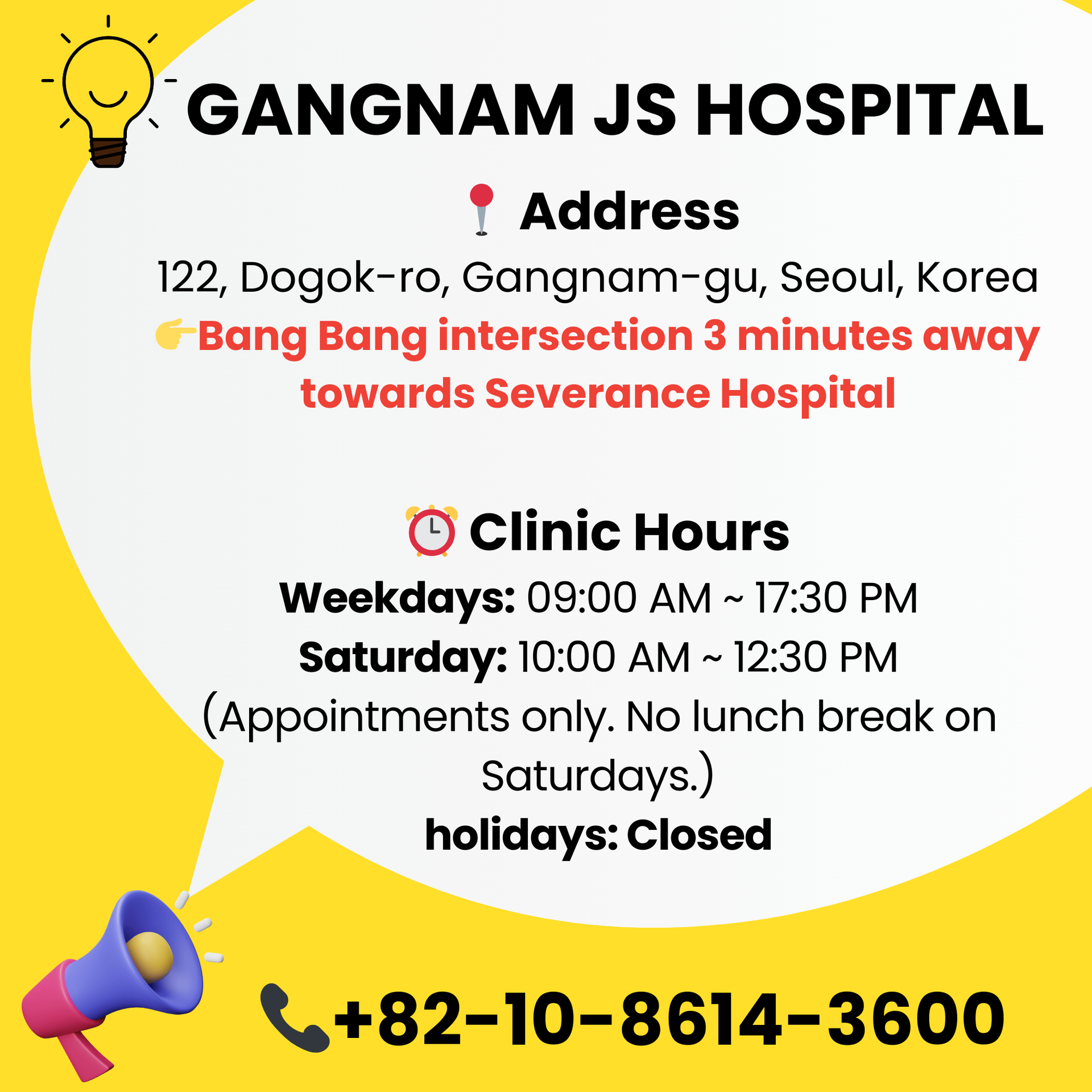
Hospital Address
Gangnam JS Hospital
122 Dogok-ro
Gangnam-gu, Seoul
South Korea
How to Get to Gangnam JS Hospital from Incheon International Airport
International patients traveling to Gangnam JS Hospital can easily reach the hospital from Incheon International Airport.
Option 1: AREX + Subway
Take the Airport Railroad Express (AREX) from Incheon Airport to Seoul Station.
Transfer to the Seoul Subway system toward the Gangnam area.
From the nearest station, take a short taxi ride to
122 Dogok-ro, Gangnam-gu, Seoul.
Estimated travel time: 70–90 minutes.
Option 2: Airport Limousine Bus
Airport limousine buses operate regularly between Incheon Airport and Gangnam.
From the Gangnam district, take a short taxi ride to the hospital.
Estimated travel time: 70–100 minutes depending on traffic.
Option 3: Taxi
A direct taxi ride from Incheon International Airport to the hospital typically takes 60–80 minutes, depending on traffic conditions.
Advanced Orthopedic Care Without Surgery
At Gangnam JS Hospital, patients receive advanced non-surgical and regenerative orthopedic care designed to reduce pain, accelerate recovery, and improve long-term joint health.
Our specialists work closely with each patient to develop personalized treatment plans that support healing, restore mobility, and help individuals return to active lifestyles safely.