Sports Injury Bracing in Seoul | Gangnam JS Hospital
Sports Injury Bracing
Sports injuries often affect joints and ligaments that require stabilization during healing. At Gangnam JS Hospital, sports injury bracing is used as part of a comprehensive orthopedic treatment plan to protect injured structures, reduce pain, and support safe recovery.
Braces are commonly recommended for ligament injuries, joint instability, and post-treatment rehabilitation. By limiting harmful movement while allowing controlled mobility, braces help athletes and active individuals return to their normal activities more safely.
What Is Sports Injury Bracing?
Sports injury bracing involves the use of specialized orthopedic supports designed to stabilize and protect injured joints or soft tissues. These braces are customized depending on the type and severity of the injury.
Bracing can be used for:
- Knee ligament injuries (ACL, MCL, or meniscus issues)
- Ankle sprains and instability
- Shoulder instability
- Wrist and elbow injuries
- Post-operative recovery
- Prevention of re-injury during sports
At Gangnam JS Hospital, specialists carefully evaluate each patient’s condition and recommend the appropriate brace type and duration of use.
Benefits of Sports Injury Bracing
Sports braces provide several important benefits during injury recovery:
1. Joint Stabilization
Braces help keep injured joints aligned and prevent excessive movement that could worsen the injury.
2. Pain Reduction
By supporting the injured area, braces reduce stress on ligaments, tendons, and muscles, helping decrease pain during daily activities.
3. Faster Recovery
Proper stabilization allows injured tissues to heal more efficiently while still maintaining controlled mobility.
4. Injury Prevention
Athletes returning to training may use braces to reduce the risk of re-injury during physical activity.
Types of Sports Braces
Orthopedic specialists may recommend different types of braces depending on the injury.
Knee Braces
Used for ligament injuries, meniscus injuries, or post-surgical recovery.
Ankle Braces
Provide stability for patients with recurrent ankle sprains or ligament damage.
Wrist and Elbow Braces
Often used for tendon injuries, overuse injuries, or fractures during healing.
Shoulder Supports
Help stabilize the shoulder joint following dislocations or soft tissue injuries.
Each brace is selected to ensure the correct balance between protection and mobility.
When Is Bracing Recommended?
Sports injury bracing may be recommended when:
- A ligament or tendon injury requires joint stabilization
- Patients are recovering from orthopedic procedures
- Athletes are returning to sports after injury
- Joint instability is present during movement
At Gangnam JS Hospital, bracing is often combined with rehabilitation programs, physical therapy, and regenerative treatments to optimize recovery outcomes.
How to Get to Gangnam JS Hospital from Incheon Airport
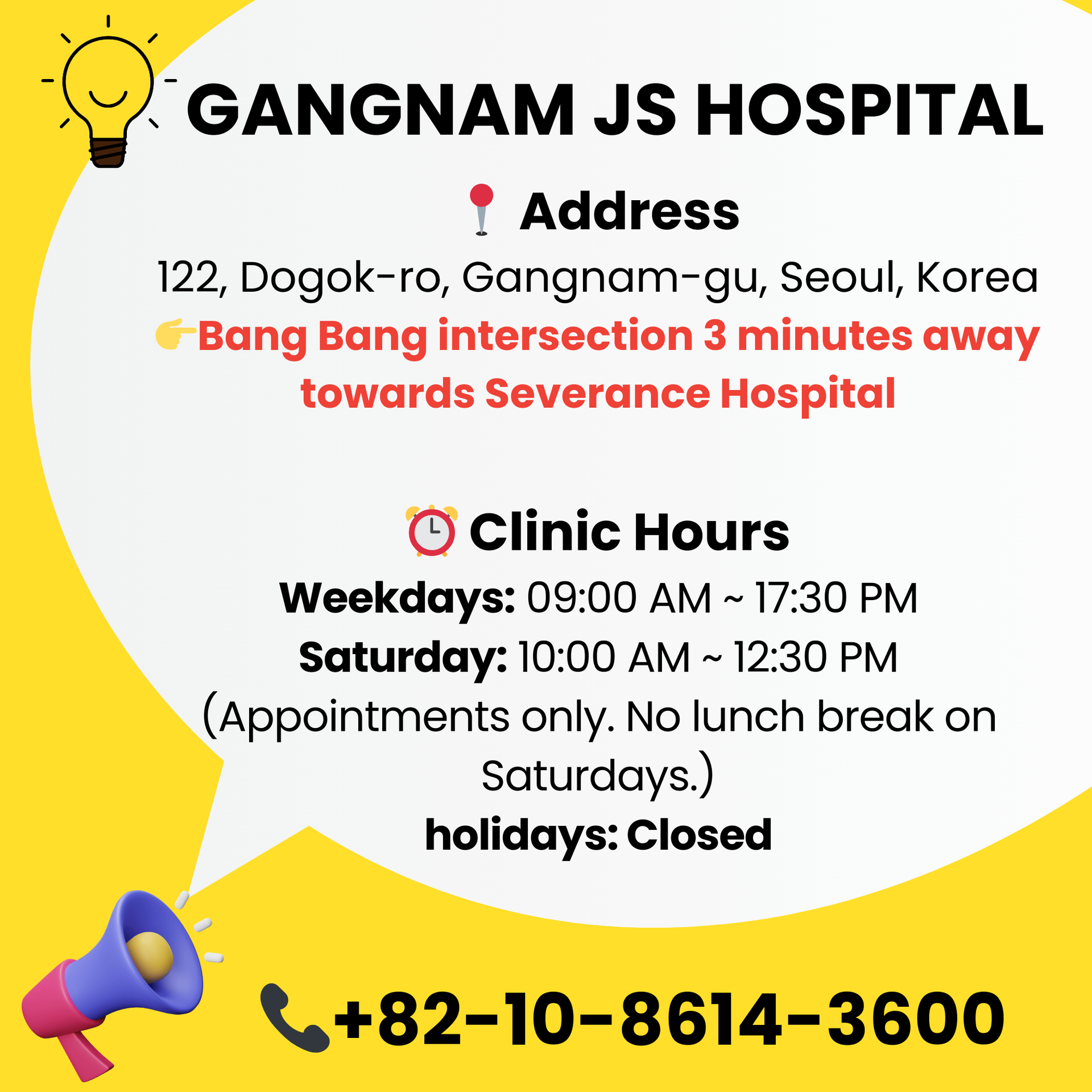
Address: 122 Dogok-ro, Gangnam-gu, Seoul, South Korea
By Airport Limousine Bus
- Take an airport limousine bus heading toward the Gangnam area from Incheon International Airport.
- Get off at a stop near Gangnam or Yeoksam Station.
- Take a short taxi ride (approximately 10 minutes) to Gangnam JS Hospital.
By Airport Railroad (AREX) + Subway
- Take the AREX train from Incheon International Airport to Seoul Station.
- Transfer to the Seoul subway system and travel toward the Gangnam district.
- Exit at a nearby station and take a short taxi ride to the hospital.
By Taxi
A direct taxi ride from Incheon International Airport to Gangnam JS Hospital takes approximately 60–70 minutes, depending on traffic.
Expert Orthopedic Care in Seoul
At Gangnam JS Hospital, sports injury bracing is part of a patient-centered treatment approach focused on restoring mobility, preventing re-injury, and helping patients return to an active lifestyle as quickly and safely as possible.
If you are experiencing joint instability, ligament injury, or recovering from a sports injury, professional evaluation and proper bracing can play a crucial role in your recovery.