Shockwave Therapy for Sports Injuries | Gangnam JS Hospital
Prolotherapy for Ligament Injuries in Seoul
Ligament injuries can lead to chronic joint instability, pain, and reduced athletic performance. Prolotherapy is a regenerative injection therapy designed to stimulate the body’s natural healing response and strengthen damaged ligaments.
At Gangnam JS Hospital, prolotherapy is used as part of a comprehensive orthopedic treatment program for sports injuries and musculoskeletal conditions. This minimally invasive therapy helps promote tissue repair and restore joint stability.
What Is Prolotherapy?
Prolotherapy, short for proliferative therapy, is an injection-based treatment that stimulates the body’s natural healing processes.
A specialized solution is injected into injured ligaments or tendons to encourage tissue repair and regeneration.
Prolotherapy may help:
• Stimulate collagen production
• Strengthen weakened ligaments
• Improve joint stability
• Reduce chronic pain
• Support long-term tissue healing
Conditions Treated With Prolotherapy
Prolotherapy at Gangnam JS Hospital may be recommended for a variety of ligament and tendon injuries.
Common conditions include:
• Ligament sprains and instability
• Chronic tendon injuries
• Knee ligament injuries
• Shoulder ligament instability
• Ankle ligament injuries
• Sports-related joint pain
This therapy can be particularly helpful for patients seeking non-surgical treatment options.
Prolotherapy Treatment Procedure
Prolotherapy treatments are typically performed during short outpatient visits.
Treatment steps generally include:
- Medical evaluation and diagnosis
- Identification of the injured ligament or tendon
- Injection of the regenerative solution into targeted tissue
- Post-treatment monitoring and recovery guidance
Multiple treatment sessions may be recommended to achieve optimal results.
Benefits of Prolotherapy
Prolotherapy has become an increasingly popular option in regenerative orthopedic medicine.
Potential benefits include:
• Non-surgical treatment option
• Strengthening of weakened ligaments
• Reduced joint pain and instability
• Stimulation of natural healing processes
• Improved mobility and physical function
Recovery and Rehabilitation
After prolotherapy treatment, patients may follow a structured rehabilitation program to support ligament healing and restore strength.
Recovery recommendations may include:
• Temporary reduction of intense physical activity
• Gradual strengthening exercises
• Physical therapy programs
• Follow-up evaluations with orthopedic specialists
The medical team at Gangnam JS Hospital monitors recovery to ensure optimal healing and long-term joint stability.
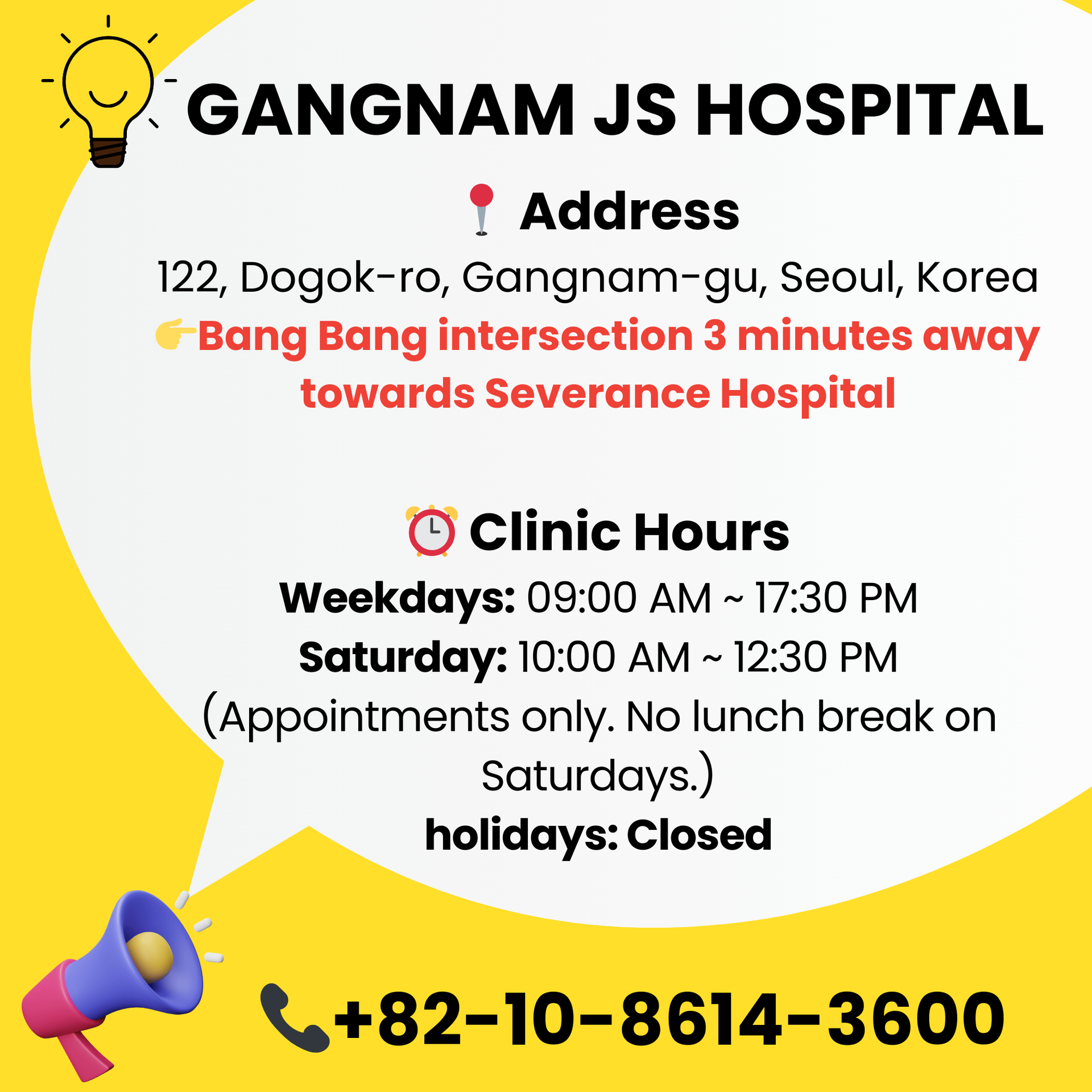
Hospital Address
Gangnam JS Hospital
122 Dogok-ro
Gangnam-gu, Seoul
South Korea
How to Get to Gangnam JS Hospital from Incheon International Airport
International patients traveling to Gangnam JS Hospital can conveniently reach the hospital from Incheon International Airport.
Option 1: AREX + Subway
Take the Airport Railroad Express (AREX) from Incheon Airport to Seoul Station.
Transfer to the Seoul subway system toward the Gangnam district.
From the nearest station, take a short taxi ride to
122 Dogok-ro, Gangnam-gu, Seoul.
Estimated travel time: 70–90 minutes.
Option 2: Airport Limousine Bus
Airport limousine buses operate regularly between Incheon Airport and the Gangnam district.
From Gangnam, take a short taxi ride to the hospital.
Estimated travel time: 70–100 minutes depending on traffic.
Option 3: Taxi
A direct taxi ride from Incheon International Airport to the hospital typically takes 60–80 minutes, depending on traffic conditions.
Regenerative Ligament Treatment in Seoul
At Gangnam JS Hospital, prolotherapy is part of an advanced regenerative medicine approach focused on strengthening ligaments, improving joint stability, and supporting long-term recovery from sports injuries.
Patients benefit from specialized orthopedic expertise, modern diagnostic technology, and personalized treatment plans designed to restore mobility and physical performance.