PRP Injection for Sports Injuries | Gangnam JS Hospital Seoul
PRP Injection for Sports Injuries in Seoul
Sports injuries can affect muscles, tendons, ligaments, and joints, often requiring specialized treatment to support recovery. Platelet-Rich Plasma (PRP) therapy is an advanced regenerative treatment designed to stimulate the body’s natural healing process.
At Gangnam JS Hospital, PRP injections are used to treat a variety of orthopedic and sports-related injuries. This minimally invasive therapy can help reduce pain, accelerate tissue repair, and support faster recovery for athletes and active individuals.
What Is PRP Therapy?
Platelet-Rich Plasma (PRP) therapy uses a patient’s own blood to promote healing in damaged tissues.
The treatment process involves:
- Drawing a small sample of the patient’s blood
- Processing the blood in a centrifuge to concentrate platelets
- Injecting the platelet-rich plasma directly into the injured area
Platelets contain growth factors that help stimulate tissue regeneration and reduce inflammation.
Conditions Treated With PRP Injections
PRP injections at Gangnam JS Hospital may be recommended for a variety of sports injuries and orthopedic conditions.
Common conditions include:
• Tendonitis and overuse injuries
• Ligament sprains and partial tears
• Muscle strains
• Tennis elbow and golfer’s elbow
• Knee pain and cartilage damage
• Achilles tendon injuries
• Chronic joint inflammation
Benefits of PRP Treatment
PRP therapy has become increasingly popular among athletes due to its regenerative benefits and minimally invasive nature.
Potential benefits include:
• Natural healing using the patient’s own cells
• Reduced inflammation and pain
• Faster recovery compared to traditional treatments
• Minimally invasive procedure
• Low risk of complications
PRP Treatment Process
The PRP procedure at Gangnam JS Hospital is typically performed on an outpatient basis and usually takes less than an hour.
Treatment steps include:
• Medical evaluation and imaging if necessary
• Blood sample collection
• Platelet concentration using specialized equipment
• Ultrasound-guided injection into the injured tissue
Patients can usually return home shortly after the procedure.
Recovery After PRP Therapy
Recovery timelines vary depending on the injury and the treated area.
After treatment, specialists may recommend:
• Temporary activity modification
• Rehabilitation exercises
• Physical therapy programs
• Gradual return to sports activities
The goal is to support tissue healing while restoring strength and mobility.
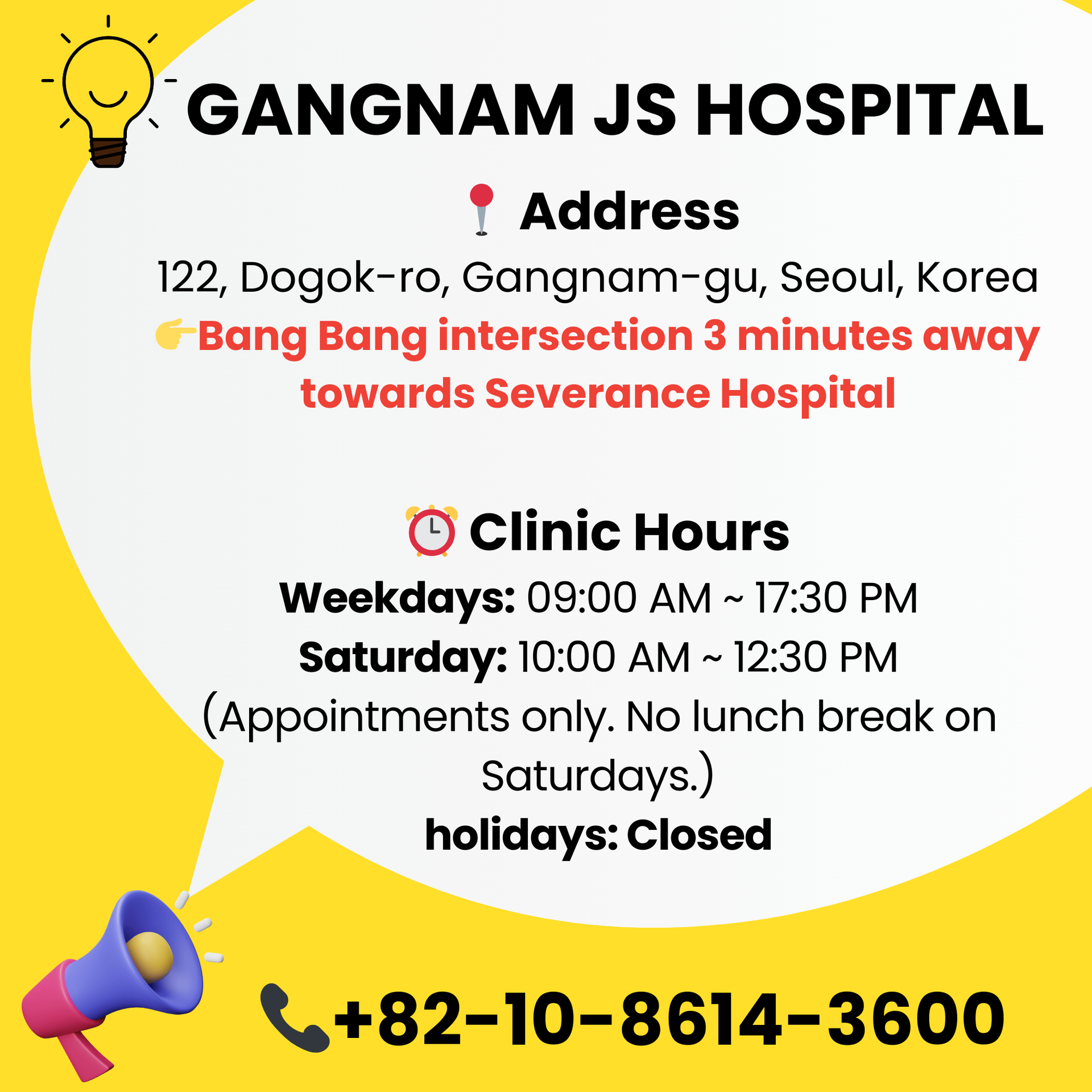
Hospital Address
Gangnam JS Hospital
122 Dogok-ro
Gangnam-gu, Seoul
South Korea
How to Get to Gangnam JS Hospital from Incheon International Airport
International patients can easily reach Gangnam JS Hospital from Incheon International Airport.
Option 1: AREX + Subway
Take the Airport Railroad Express (AREX) from Incheon Airport to Seoul Station.
Transfer to the Seoul subway system toward the Gangnam district.
From the nearest station, take a short taxi ride to
122 Dogok-ro, Gangnam-gu, Seoul.
Estimated travel time: 70–90 minutes.
Option 2: Airport Limousine Bus
Airport limousine buses travel regularly from Incheon Airport to the Gangnam area.
From Gangnam, take a short taxi ride to the hospital.
Estimated travel time: 70–100 minutes depending on traffic.
Option 3: Taxi
A direct taxi ride from Incheon International Airport to the hospital typically takes 60–80 minutes, depending on traffic conditions.
Regenerative Sports Injury Care in Seoul
At Gangnam JS Hospital, PRP therapy is part of a comprehensive regenerative treatment approach designed to support natural healing and long-term recovery.
Patients receive personalized care focused on reducing pain, restoring function, and helping athletes return to their sport safely and effectively.