Ultrasound-Guided Joint Injection Treatment | Gangnam JS Hospital
Ultrasound-Guided Joint Injection in Seoul
Joint pain caused by sports injuries, inflammation, or degenerative conditions can limit mobility and daily activities. Ultrasound-guided joint injections provide a highly precise method of delivering medication directly to the affected joint or surrounding tissue.
At Gangnam JS Hospital, ultrasound-guided injections are used as part of a comprehensive orthopedic treatment program. By using real-time imaging technology, specialists can ensure accurate placement of medication for improved effectiveness and patient safety.
What Is an Ultrasound-Guided Joint Injection?
An ultrasound-guided joint injection uses medical ultrasound imaging to visualize the joint, tendons, ligaments, and surrounding tissues during the injection procedure.
This technique allows physicians to:
• Precisely target the affected area
• Avoid nearby nerves and blood vessels
• Improve treatment accuracy
• Deliver medication directly to inflamed tissue
• Enhance treatment effectiveness
Conditions Treated With Ultrasound-Guided Injections
Ultrasound-guided injections at Gangnam JS Hospital may be used to treat a variety of orthopedic and sports-related conditions.
Common conditions include:
• Joint inflammation and pain
• Tendon injuries and tendonitis
• Ligament injuries
• Shoulder, knee, and ankle pain
• Bursitis
• Sports-related joint injuries
Injection Procedure
The ultrasound-guided injection procedure is typically performed in a short outpatient visit.
Treatment steps generally include:
- Clinical evaluation and imaging review
- Ultrasound visualization of the affected joint
- Sterile preparation of the injection site
- Precise injection of medication under real-time ultrasound guidance
The procedure usually takes only a few minutes and patients can often return home shortly afterward.
Benefits of Ultrasound-Guided Treatment
Ultrasound-guided injections provide several advantages compared to traditional injection methods.
Potential benefits include:
• Higher injection accuracy
• Improved treatment effectiveness
• Reduced risk of complications
• Minimally invasive procedure
• Faster recovery and minimal downtime
Recovery and Follow-Up Care
Most patients can return to normal daily activities shortly after the procedure, although strenuous physical activity may be temporarily limited.
Post-treatment care may include:
• Short rest period after the injection
• Physical therapy or rehabilitation exercises
• Gradual return to sports or physical activity
• Follow-up evaluation with orthopedic specialists
The specialists at Gangnam JS Hospital provide individualized treatment plans to ensure optimal recovery.
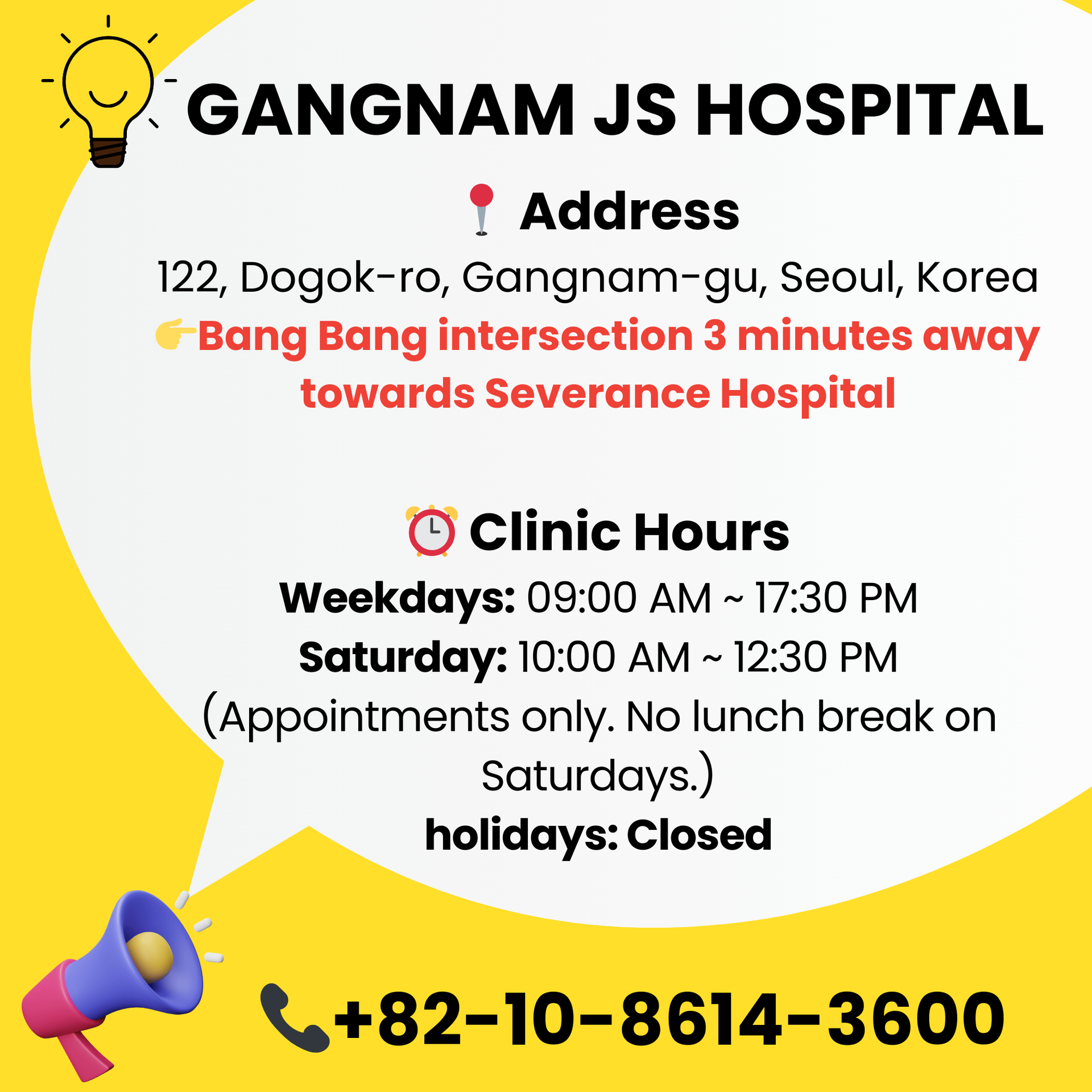
Hospital Address
Gangnam JS Hospital
122 Dogok-ro
Gangnam-gu, Seoul
South Korea
How to Get to Gangnam JS Hospital from Incheon International Airport
International patients can conveniently reach Gangnam JS Hospital from Incheon International Airport.
Option 1: AREX + Subway
Take the Airport Railroad Express (AREX) from Incheon Airport to Seoul Station.
Transfer to the Seoul subway system toward the Gangnam district.
From the nearest station, take a short taxi ride to
122 Dogok-ro, Gangnam-gu, Seoul.
Estimated travel time: 70–90 minutes.
Option 2: Airport Limousine Bus
Airport limousine buses operate regularly between Incheon Airport and the Gangnam area.
From Gangnam, take a short taxi ride to the hospital.
Estimated travel time: 70–100 minutes depending on traffic.
Option 3: Taxi
A direct taxi ride from Incheon International Airport to the hospital typically takes 60–80 minutes, depending on traffic conditions.
Precision Orthopedic Care in Seoul
At Gangnam JS Hospital, ultrasound-guided joint injections are part of an advanced orthopedic care program designed to relieve pain, improve mobility, and support recovery from sports injuries.
Patients receive expert care from experienced orthopedic specialists using modern diagnostic imaging and minimally invasive treatment techniques.