Anti-Inflammatory Injection Therapy for Sports Injuries | Gangnam JS Hospital, Seoul
Platelet-Rich Plasma Knee Treatment
Knee injuries and chronic knee pain are common among athletes and active individuals. Conditions such as ligament strains, cartilage damage, and tendon inflammation can limit mobility and reduce performance.
At Gangnam JS Hospital, Platelet-Rich Plasma (PRP) knee treatment is used to support natural healing by stimulating tissue repair and reducing inflammation.
What Is Platelet-Rich Plasma (PRP) Treatment?
Platelet-Rich Plasma therapy is a regenerative medical treatment that uses the patient’s own blood to promote healing.
During the procedure:
- A small sample of blood is drawn from the patient.
- The blood is processed to concentrate platelets and growth factors.
- The platelet-rich plasma is injected into the injured knee joint or surrounding tissues.
These growth factors help stimulate tissue repair and accelerate recovery.
Knee Conditions Treated with PRP
PRP therapy may be recommended for a variety of knee-related sports injuries and orthopedic conditions, including:
- Ligament injuries such as ACL or MCL strains
- Meniscus irritation or degeneration
- Patellar tendonitis (jumper’s knee)
- Cartilage damage in the knee joint
- Chronic knee inflammation
- Mild to moderate knee osteoarthritis
Doctors at Gangnam JS Hospital evaluate each patient carefully to determine whether PRP therapy is appropriate.
Benefits of PRP Knee Treatment
PRP injections offer several potential advantages for patients seeking non-surgical treatment:
- Supports natural tissue regeneration
- Reduces inflammation and joint pain
- Minimally invasive procedure
- Uses the patient’s own biological material
- May improve joint function and mobility
Many athletes choose PRP therapy to support recovery while avoiding more invasive procedures.
Precision Injection with Ultrasound Guidance
To maximize effectiveness, specialists at Gangnam JS Hospital often perform PRP injections using ultrasound guidance.
This technique ensures accurate placement of the platelet-rich plasma directly into the injured tissue.
Recovery and Rehabilitation
After PRP knee treatment, patients may be advised to:
- Limit strenuous activity for a short period
- Begin guided physical therapy
- Gradually return to sports or exercise
- Follow a structured rehabilitation program
Most patients experience gradual improvement as the healing process progresses.
How to Get to Gangnam JS Hospital from Incheon Airport
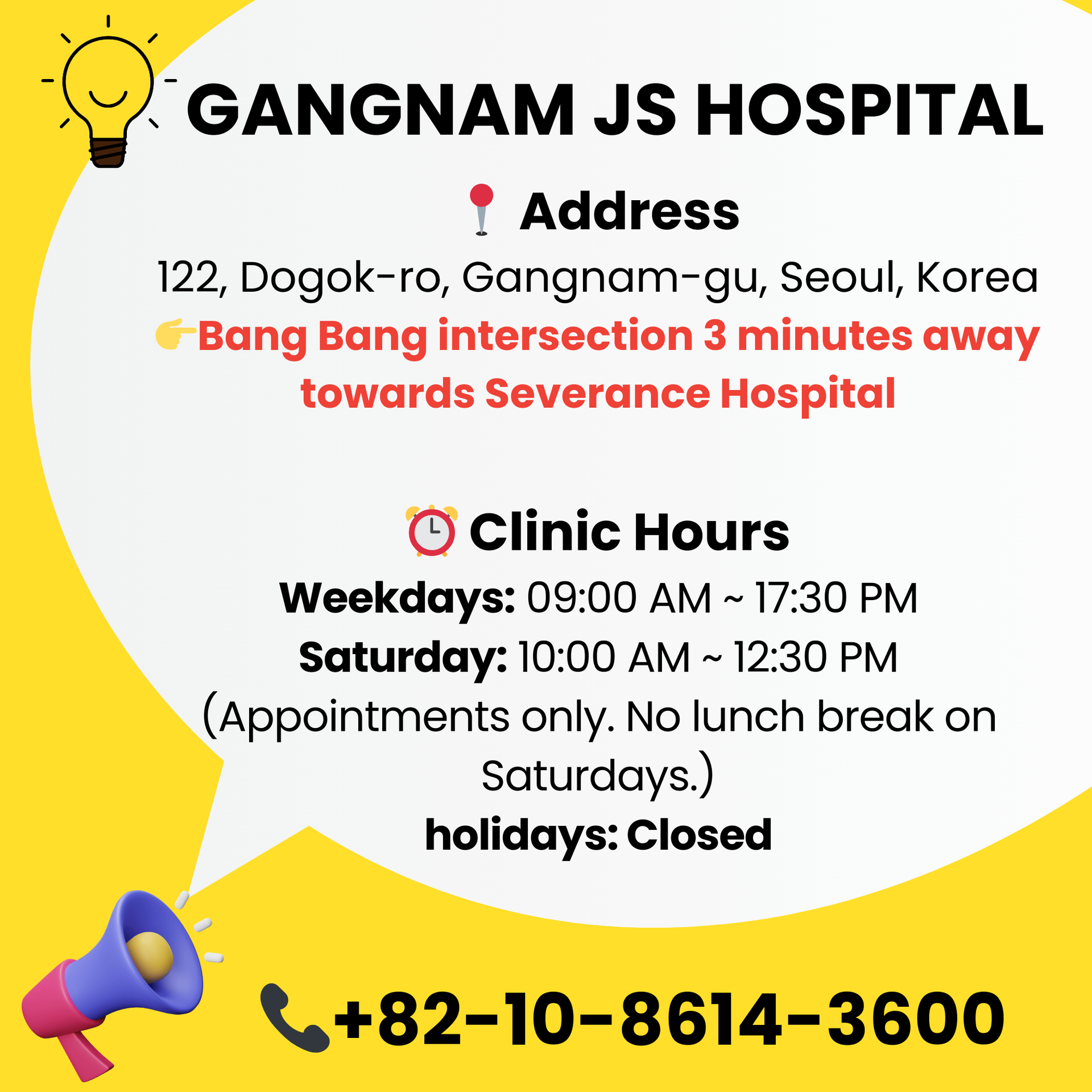
Address: 122 Dogok-ro, Gangnam-gu, Seoul, South Korea
By Airport Limousine Bus
- Depart from Incheon International Airport using an airport limousine bus heading toward the Gangnam area.
- Get off near Gangnam Station or a nearby stop.
- Take a short taxi ride (approximately 10 minutes) to Gangnam JS Hospital.
By AREX Train + Subway
- Take the Airport Railroad Express (AREX) from Incheon International Airport to Seoul Station.
- Transfer to the Seoul subway toward the Gangnam area.
- From the nearest station, take a short taxi ride to Gangnam JS Hospital.
By Taxi
A direct taxi from Incheon International Airport to Gangnam JS Hospital typically takes 60–70 minutes, depending on traffic conditions.
Advanced Knee Treatment in Seoul
At Gangnam JS Hospital, Platelet-Rich Plasma knee treatment is part of a comprehensive sports medicine program designed to reduce pain, restore joint function, and help patients safely return to physical activity.