Shockwave Therapy for Sports Injuries | Gangnam JS Hospital
Shockwave Therapy for Sports Injuries in Seoul
Sports injuries involving tendons, muscles, and ligaments can cause persistent pain and limit athletic performance. Shockwave therapy is a non-invasive treatment that stimulates healing in damaged tissues and helps relieve chronic pain.
At Gangnam JS Hospital, shockwave therapy is used as part of a comprehensive sports medicine program designed to treat musculoskeletal injuries and support faster recovery for athletes and active individuals.
What Is Shockwave Therapy?
Shockwave therapy, also known as extracorporeal shockwave therapy (ESWT), uses controlled acoustic waves to stimulate the body’s natural healing response in injured tissue.
This therapy can help:
• Increase blood circulation in damaged areas
• Stimulate tissue regeneration
• Break down scar tissue and calcifications
• Reduce chronic inflammation
• Accelerate the healing process
Conditions Treated With Shockwave Therapy
Shockwave therapy at Gangnam JS Hospital may be recommended for a variety of sports injuries and orthopedic conditions.
Common conditions include:
• Plantar fasciitis
• Achilles tendonitis
• Tennis elbow
• Patellar tendonitis
• Shoulder tendon injuries
• Muscle trigger points and chronic pain
• Calcific tendonitis
Shockwave Treatment Procedure
Shockwave therapy is a quick outpatient procedure that does not require surgery or anesthesia.
Typical treatment steps include:
- Clinical evaluation of the injury
- Identification of the targeted treatment area
- Application of acoustic shockwaves using specialized equipment
- Short treatment sessions lasting approximately 10–20 minutes
Multiple sessions may be recommended depending on the severity of the condition.
Benefits of Shockwave Therapy
Shockwave therapy is widely used in sports medicine because it offers effective pain relief without surgical intervention.
Potential benefits include:
• Non-invasive treatment
• Reduced pain and inflammation
• Improved blood flow and tissue healing
• Faster recovery from chronic injuries
• Minimal downtime after treatment
Recovery and Rehabilitation
Most patients can return to normal daily activities shortly after shockwave therapy. However, high-impact sports may be temporarily limited to allow healing.
Recovery plans may include:
• Stretching and strengthening exercises
• Sports rehabilitation programs
• Gradual return to athletic activity
• Follow-up evaluation with orthopedic specialists
The medical team at Gangnam JS Hospital provides personalized treatment plans to support long-term recovery.
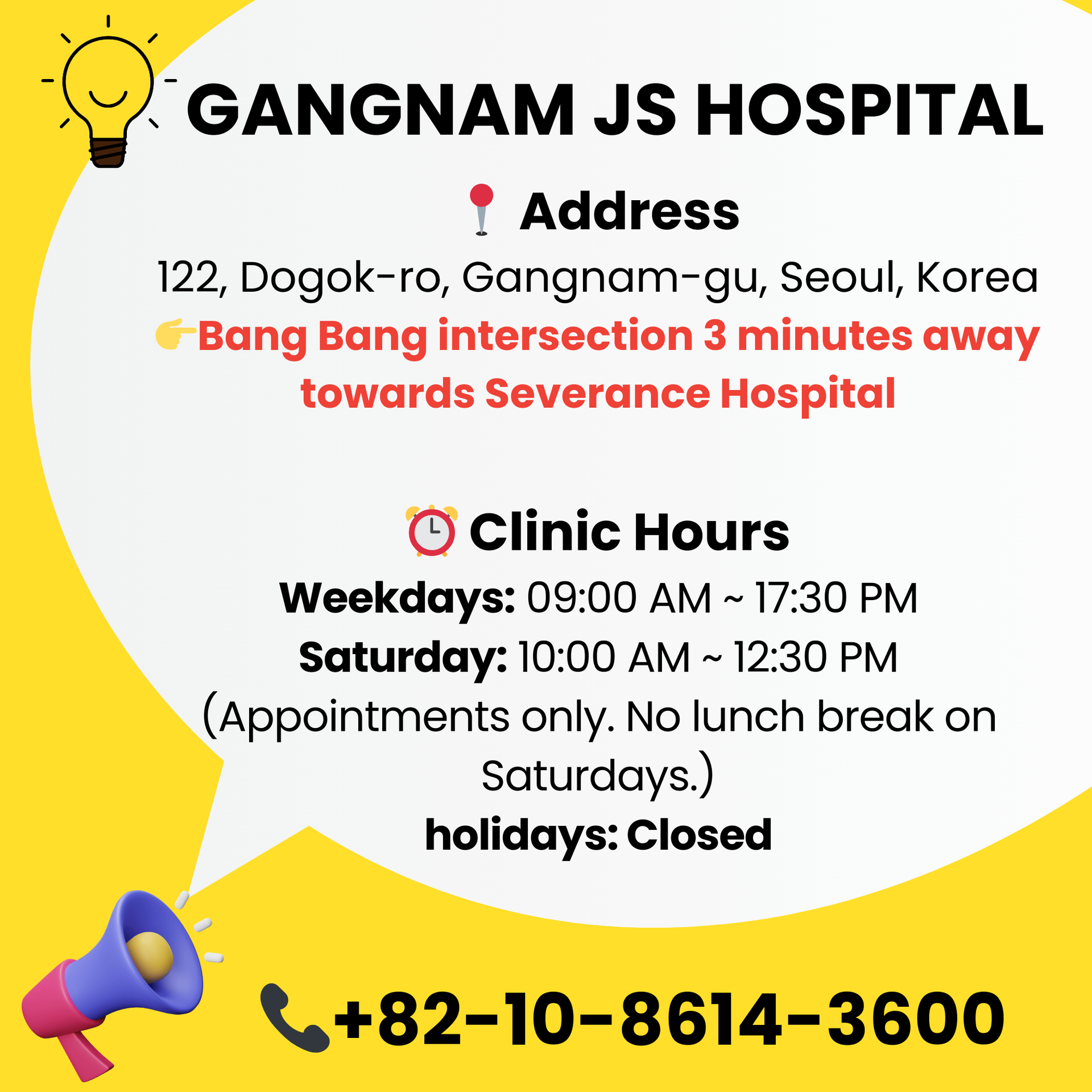
Hospital Address
Gangnam JS Hospital
122 Dogok-ro
Gangnam-gu, Seoul
South Korea
How to Get to Gangnam JS Hospital from Incheon International Airport
International patients can easily reach Gangnam JS Hospital from Incheon International Airport.
Option 1: AREX + Subway
Take the Airport Railroad Express (AREX) from Incheon Airport to Seoul Station.
Transfer to the Seoul subway system toward the Gangnam district.
From the nearest station, take a short taxi ride to
122 Dogok-ro, Gangnam-gu, Seoul.
Estimated travel time: 70–90 minutes.
Option 2: Airport Limousine Bus
Airport limousine buses operate regularly between Incheon Airport and the Gangnam area.
From Gangnam, take a short taxi ride to the hospital.
Estimated travel time: 70–100 minutes depending on traffic.
Option 3: Taxi
A direct taxi ride from Incheon International Airport to the hospital typically takes 60–80 minutes, depending on traffic conditions.
Non-Surgical Sports Injury Treatment in Seoul
At Gangnam JS Hospital, shockwave therapy is part of an integrated sports medicine program focused on reducing pain, accelerating recovery, and helping patients return to physical activity safely.
Patients receive specialized care from experienced orthopedic professionals using modern diagnostic and treatment technologies.